Wednesday, 7 December 2022

Nutrigenomics Helps in Improving Functioning of the Body

The idea behind nutrigenomics is to support people in making long-lasting dietary behavior changes that are good for their health. The goal of nutrigenomics is to clarify how diet affects human health. 

The two main causes of an increase in chronic diseases among patients are unhealthy lifestyle trends and dietary decisions. Additionally, a greater emphasis on health management factors at later stages of ageing has resulted from an increase in the geriatric population and an increase in life expectancy. An individual can achieve a long-lasting, healthful change in eating habits with the aid of nutrigenomics. The bioactive food ingredients may interact with genes, which would then have an impact on how the body works. Nutrigenomics allows for the study of metabolic inborn errors that can be treated and controlled through diet.

The understanding of genetic associations has advanced over time, particularly through genome-wide association studies, which have revealed a significant role for genes in human ageing and age-related diseases (ARD). Conditions like obesity have a strong connection to nutrition-gene interaction and may be controlled to combat the rising prevalence of obesity in the world.

The development of omics technology has provided access to

  • deliver biomarkers for wellbeing and comfort
  • reveal early disease indicators
  • help distinguish between dietary responders 
  • non-responders by identifying bioactive food components.

The interaction between a gene and a nutrient alters genes linked to metabolism, which in turn affects the quantity and activities of the enzymes produced to feed the body. This gene-nutrient interaction has the power to change the molecular phenotypes, including disease expression. The interaction between genes and diet is frequently influenced by a person's environment, biology, and genetic makeup.

The global nutrigenomics market was estimated to be worth $903.0 million in 2020, and BIS Research's most recent market intelligence indicates that it is projected to increase at a CAGR of 17.26% from 2021 to 2031.

Since its inception, the global market for nutrigenomics has grown, and as a result, so have its applications. Nutrigenomics can currently be applied in the following fields.

Women's health

In the context of nutrigenomics studies, women's health is a very important topic. Lack of vaginal Lactobacillus species puts women at high risk for serious, expensive reproductive diseases as well as unfavourable obstetric outcomes. The nutrigenomics market is growing as a result of the use of potential prebiotics in addressing the recovery of women's health. Prebiotics will not be used in prevention and treatment recommendations for women's health for quite some time, though.

Digestive health

A highly complex and varied microbial community, with a 10:1 ratio of microbial to human cells, resides in the human gastrointestinal tract. Malnutrition, diabetes, chronic inflammatory bowel diseases (including ulcerative colitis and Crohn's Disease), and pathological diseases are all largely caused by disruption of the gut microbiota.

Immune health

The immune system in the human body is made up of a very complex network of elements that can adapt and react to a variety of threats. Innate and adaptive immunity mechanisms in the body interact with one another to form the partnership between the immune system and the microbiota. Any change in the microbiota's functioning brought on by dietary modifications, the use of antibiotics, and the eradication of particular microbial species can make microbes more of a liability than an ally.

Others

Nutrigenomics also has a significant impact on the health of the skin, bones, and teeth.


North America is Expected to Dominate the Global Emerging Sleep Apnea Devices and Platforms Market

 The global emerging sleep apnea devices and platforms market is projected to reach up to $ 13,179.6 million by 2030, witnessing a compound annual growth rate (CAGR) of 9.94% during the forecast period 2021-2030. 

The global emerging sleep apnea devices and platforms market is highly consolidated in nature. The market is pre-dominated by major medical device companies, such as ResMed, Koninklijke Philips N.V., and Fisher and Paykel Healthcare Limited.

 North America dominated the global emerging sleep apnea devices and platforms market with a market share of 43.56% in 2019. The region is anticipated to reach up to $5,227.2 million by 2030, with a CAGR of 8.99% for the forecast period 2021-2030.


During COVID-19 pandemic, various regulatory agencies such as Food and Drug Administration (FDA), U.S. and Therapeutic Goods Administration (TGA) have approved the usage of positive airway pressure (PAP) devices such as continuous positive airway pressure (CPAP) devices, bilevel positive airway pressure (BPAP) devices, and adaptive servo ventilators (ASVs) as ventilators. Additionally, the demand for oral appliances has also increased significantly due to the high risk of infection in the case of COVID-19 positive sleep apnea patients. In the situation, the usage of a PAP device can increase the risk of infection for the patient’s peers. Other devices with increased demand included home sleep testing devices and sleep apnea screening and monitoring devices and solutions. In addition to conventional devices, emerging therapeutic and diagnostic and monitoring devices have also witnessed a significant increase in demand.

Key Questions Answered in this Report:

•    How has the COVID-19 pandemic impacted the global emerging sleep apnea devices and platforms market?
•    Is the usage of continuous positive airway pressure (CPAP) devices, bilevel positive airway pressure (BPAP) devices, and adaptive servo-ventilators (ASV) as clinical ventilators a sustainable solution for the post-COVID-19 scenario?
•    How can the market cater to global healthcare system requirements such as remote patient monitoring, constant collection of clinical data, and clinical data management and its analysis?
•    What is the global regulatory landscape pertaining to the global emerging sleep apnea devices and platforms market? How have the regulations altered owing to the COVID-19 pandemic?
•    What has been the patent landscape for the market during 2017-2020? How has the COVID-19 pandemic impacted the patent scenario?
•    What are the major companies operating in the market and their respective market share?
•    What are the major strategies employed by the companies to enter the market or for business expansion?
•    How are the emerging sleep apnea devices and platforms different from conventional sleep apnea devices?
•    What are the pipeline products and their analysis for the market? 
•    What are the major industry trends, market drivers, and market restraints that would impact the market during the forecast period 2021-2030? What are the growth opportunities for the market?
•    What therapeutic and diagnostic devices and platforms are expected to witness the highest growth during the forecast period 2021-2030?
•    Which end-user segment is expected to lead the market during the forecast period 2021-2030?
•    What would be the country-level revenue share and CAGR for the market during the forecast period 2021-2030?
•    Which emerging countries have immense opportunities for the growth and adoption of sleep apnea devices and platforms? Would the scenario continue for the next five years?
•    Where will the advancements in technology offered by various companies take the industry in the mid to long term?
•    What are the upcoming alternative therapies and associated devices for sleep apnea treatment?

For more information on this report (along with the option to Get a Free sample)

 Visit - Emerging Sleep Apnea Devices and Platforms Market- Analysis & Forecast | BIS Research


Cloud- and Web-Based Solutions Are to Dominate the Global AI-Enabled Medical Imagining Solutions Market

 Currently, the availability of machine learning and big data in artificial intelligence (AI) is developing rapidly. From driverless cars to speech recognition, AI is entering into daily lives and across multiple verticals such as healthcare. Starting from image-guided therapy to development and discovery, AI has become a critical element in the healthcare industry. 

As per the development model, the market has been divided into web and cloud based. Currently, the global AI-enabled medical imaging solutions market has been dominated by cloud-based solutions with shares of 64.72% in 2019. It is projected to touch 66.25% in 2030. The cloud- and web-based solutions segment are supposed to grow at a CAGR of 26.96%. 


The global AI-enabled medical imaging solutions market consists of numerous large-scale as well as small-scale manufacturers and vendors. Presently, with the increasing adoption of AI in healthcare, the manufacturers in the market have ample number of opportunities to expand their offerings and to establish a strong foothold in the market. 

During January 2015- November 2020, the market witnessed approximately 134 joint ventures, collaborations, and partnerships, 102 funding and investments, 101 product approvals, 54 product launches and enhancements, and six mergers and acquisitions in the past five years (2015-2020). Joint ventures, collaborations, and partnerships were among the most frequently followed strategies which were incorporated by numerous players to establish a strong foothold in the market.

Some of the major players operating in the market include Siemens Healthineers AG., General Electric Company, Agfa- Gevart Group, Hologic, Inc., Fujifilm Holdings Corporation, General Electric Company, iCAD, Inc., Koninklijke Philips N.V., Nuance Communications, Inc., Synopsys Inc.,  NVIDIA Corporation, Nanox, Butterfly Network, Inc., Hyperfine. Aidoc, Arterys Inc, Beijing Infervision Technology Co., Ltd., Blackford Analysis Limited, Envoy AI, MIRADA MEDICAL LIMITED, VUNO Inc., and Zebra Medical Vision, Inc.

Key Questions Answered in this Report:

•    What are the various AI-enabled medical imaging solutions and systems available in the market?
•    What is the current market size and future potential of these products? 
•    What are the major market drivers, challenges, and opportunities in the global AI-enabled medical imaging solutions market?
•    What are the guidelines implemented by different government bodies to regulate the approval of AI-enabled medical imaging solutions? 
•    What are the key technological developments on which the current industry leaders are spending a major share of their research and development (R&D) investments?
•    Who are the leading players holding dominating shares in the global AI-enabled medical imaging solutions market, currently?
•    What are the key strategies incorporated by the players of global AI-enabled medical imaging solutions market, to sustain the competition and retain their supremacy?  
•    What is the current revenue contribution of different therapeutic applications, workflow, and modality, and how would it evolve in the forecast period? 
•    What is the current demand contribution of different product types and how would it evolve in the forecast period?
•    What is the current demand contribution of different deployment models and how would it evolve in the forecast period?
•    Which countries contribute to the major share of current demand and which countries hold significant scope for expansion for business activities, by players of the global AI-enabled medical imaging solutions market?

For more information on this report (along with the option to Get Free Sample) visit - AI-Enabled Medical Imaging Solutions Market - Industry Analysis, Trends & Forecast 2030 | BIS Research


Tuesday, 6 December 2022

Application of Telemedicine in the Healthcare Sector


Telemedicine is a potential tool that significantly improves patient engagement and makes healthcare more affordable and accessible. Telemedicine first appeared in the late 1950s, and as tele-communication technology has advanced over the years, it has undergone constant change. Telemedicine has a wide range of uses.

It can be difficult and expensive to constantly visit hospitals for minor needs. This becomes challenging for these people to travel so far to see the doctors if they live a long way from the hospital. Additionally, people are forced to follow social distancing and have less interaction with one another in the COVID-19 pandemic era. Breaking these rules puts you at risk and makes the coronavirus more likely to spread. Patients at Corona are continuously under the care of doctors. Their own lives are now in grave danger as a result of this. The best method for lowering the likelihood of viruses spreading to one another has been telemedicine.

According to a report by BIS Research, the global telemedicine market is anticipated to grow to a value of about $123 billion by the end of the next year, 2030.

HOW DOES TELEMEDICINE WORK?

The term "telemedicine" is derived from Latin and Greek. The words "Tele" and "Mederi," which together denote distance and healing, respectively, are of Greek and Latin origin. It was an experiment that many people considered. The ongoing COVID-19 pandemic is one of the main factors that led to this experiment becoming a reality today. Doctors can communicate with patients and interact with them less physically by using telemedicine. In this, medical professionals transmit the necessary data in real time from their computer screen to the patient's computer screen. The patients' lives have been made easier by this technology. They are no longer required to wait in the lengthy lines for their appointments as of right now. Instead, they can use telemedicine applications to connect to any of the doctors from the comfort of their own home. The most winners are those who reside in rural areas. They no longer need to leave their neighborhood to access top-notch medical care.

The deadly coronavirus is currently under attack worldwide. The global healthcare sector now has a valuable and highly effective asset in telemedicine. Instead of travelling to hospitals for treatment, people who have contracted the virus can use this technology to connect with a doctor. Because telemedicine offers such simple connectivity, the telemedicine market has begun to expand quickly in every nation. The  telemedicine market in India was estimated at Rs. 380.22 crores (roughly $5 billion) in 2019 and is projected to reach Rs. 1765.56 crores (roughly $23 billion) by the end of 2025, according to BIS research.

BENEFITS OF TELEMEDICINE TECHNOLOGY:

People can now benefit from telemedicine integration thanks to the constantly developing medical industry, which has made it possible. There is always the option to connect to a doctor via telemedicine to obtain the necessary information and treatments, so one does not need to visit the doctor frequently.

Advantages:

  • Precise control over the coronavirus outbreak has been made possible thanks in large part to telemedicine. Because of this technology, patients are less physically attracted to the infection. Until there is an emergency scenario, people are no longer making frequent trips to the hospital.
  • Better disease and scenario assessments are made possible by telemedicine. For instance, if one has developed an allergy, the doctor can look about one's home to acquire a better understanding of the condition.

  • Enhancing family ties can be accomplished with the aid of telemedicine. The members of many families reside far apart. Therefore, by using this online platform, doctors can also communicate with other users who want to learn more about the patient's illness and take the necessary action.
  • In comparison to going to the doctor's office, scheduling an appointment or interacting with a doctor is inexpensive. Saving money with telemedicine may be the best option.
  • Telemedicine makes it possible for patients to see their doctor whenever they desire. Sudden discomfort and fever are common in newborn newborns. In such cases, one can call the doctor at midnight and request the necessary details as well as a prescription.

    CONCLUSION:

    The COVID-19 caused a sudden increase in demand for telemedicine technology. No one wants to go to the hospitals these days unless there is an emergency, so nobody goes there often. The best method of communicating with doctors and obtaining information without leaving your home is now possible thanks to telemedicine. By reducing the need for physical contact, it has decreased the likelihood that people will contract the virus.


    Monday, 5 December 2022

    Causes and Risks of Lung Cancer in the World


    The disease claims millions of lives each year. The WHO report states that cancer will be responsible for almost 10 million deaths in 2020. Lung cancer is the most prevalent cancer among the different types, with 2.21 million cases expected in 2020.

    The number of cancer cases and related mortality rates are predicted to increase further in the coming years as a result of significant factors like rising air pollution and risky smoking habits among people. In the United States, 224,000 new cases of lung cancer are anticipated to be diagnosed by the year 2030. According to cancer.net, in 2022, there are expected to be 130,180 lung and bronchus cancer deaths in the
    United States and approximately 236,740 new cases of the disease.

    The mortality rate and alarmingly high prevalence have placed an unprecedented strain on the healthcare system. Researchers and healthcare professionals are working to develop effective cancer diagnostic and treatment procedures by making the best use of the cutting-edge technology that is currently available.

    One such approach that has recently attracted the attention of experts is lung cancer genomic testing. In order to pinpoint the precise type of mutation that differs depending on each person's genetic makeup, a molecular analysis of the tumour is performed. This procedure aids the medical professionals in selecting the most suitable course of action for a specific patient.

    Despite the fact that the global market for lung cancer genomic testing is still in its infancy, numerous businesses are making significant investments in R&D to advance the field.

    The transition of healthcare systems toward precision diagnostic and precision medicine is responsible for the increase in the adoption of lung cancer genomic testing. The use of cutting-edge technology facilitates making well-informed decisions and leads to better cancer treatment outcomes. Significant opportunities exist in the global lung cancer genomic testing market as a result of rising recommendations from international oncology societies for the use of genomic testing for lung cancer diagnosis.

    According to a BIS Research report, the lung cancer genomic testing medicine market was estimated to be worth $1.26 billion in 2020 and is projected to reach $3.27 billion by 2031, growing at a CAGR of 8.97% over the forecast period of 2021–2031.

    Causes and Risks of Lung cancer

    It is critical to comprehend the disease's underlying causes, risks, and solutions in order to increase public awareness and educate people about its dangers. The same will be covered in more detail in this article. Some possible cancer causes include the ones listed below:

    Risk factors leading to lung cancer

    1. Smoking- Smoking is the most hazardous habit acquired by humans. It is considered to be the number one cause of lung cancer as 90% of lung cancer cases are attributed to the extreme smoking habits in the patients. Tobacco smoke contains many dangerous chemicals that are known to cause lung cancer.
    The chemicals released from cigarette smoke do harm not only the smokers but also the people around them inhaling the smoke through the air. Breathing second-hand smoke puts people at risk for lung cancer or other respiratory illnesses.

    2. Exposure to some hazardous chemicals, including asbestos, uranium, arsenic, cadmium, chromium, nickel, and petroleum, increases the risk of lung cancer. The risk of cancer is higher for those who live close to the industries that emit these chemicals.
    3. Particle Pollution: The air is filled with a mixture of minuscule solid and liquid particles that are extremely hazardous to human health due to a variety of air pollution causes, including factories, vehicles, mining operations, etc. There is evidence that the risk of lung cancer is increased by air pollution particles.

    4. Genes: One's likelihood of developing lung cancer is significantly influenced by genetic factors. A person's risk of developing lung cancer may increase if there is a family history of the disease. It is crucial to seek medical advice and exercise caution if someone in the family currently has lung cancer or has ever had the disease.

    To get a free sample of the report, click here - https://bisresearch.com/requestsample?id=1301&type=download


    One such difficult and dangerous disease for which people have spent centuries trying to find a cure is cancer. But thanks to technological advancements, the healthcare sector has made remarkable strides in slowing the spread of the disease and enabling accurate early diagnosis. One such instance of a sophisticated diagnostic tool that has helped many 

    Interested to know more about the growing technologies in your industry vertical? Get the latest market studies and insights from BIS Research. Connect with us at  https://bisresearch.com/contact-us 


    Personalized Neovaccine to Lead the Product Segment for the Global Neoantigen Cancer Vaccine Market

     The BIS Research report on the global neoantigen cancer vaccine market briefly segments the neovaccine market on the basis of product type, type of neovaccine, therapeutic specialty, line of therapy, and region.

     With respect to the overall market share, the personalized neovaccine segment is expected to hold the largest share of 83.49% of the market in 2031, and this trend is expected to continue during the forecast period 2024- 2031.

     The large share can be attributed to the existence of 90.00% personalized neovaccines in the mid stage of clinical development and are expected to reach the market during the forecast period 2024-2031.

    Pipeline Segmentation

    •    The emerging neoantigen cancer vaccines are segmented based on product type into personalized and off-the-shelf neovaccines.
    •    The emerging neoantigen cancer vaccines are segmented based on disease/application into lung cancer, urinary system cancer, melanoma, liver cancer, head and neck cancer, and blood and bone marrow cancer.
    •    The
    emerging neoantigen cancer vaccines are segmented based on type of neovaccine into nucleic acid vaccine, peptide vaccine, and dendritic cell vaccine. 
    •    The emerging neoantigen cancer vaccines are segmented based on line of therapy into first, second, and later lines therapy. 
    •    The emerging neoantigen cancer vaccines are segmented based on development phase into Phase I, II, and III. 
    •    The emerging neoantigen cancer vaccines are segmented on the basis of route-of-administration into intradermal, subcutaneous, and intramuscular administrations.

    Key Questions Answered in this Report:

    •    What are the major market drivers, challenges, and opportunities in the global neoantigen cancer vaccines market?
    •    What are the underlying structures resulting in emerging trends within the global neoantigen cancer vaccines market?
    •    What key development strategies are implemented by the major players in order to sustain in the competitive market?
    •    What are the key regulatory implications in developed and developing regions for neoantigen cancer vaccines?
    •    How each segment of the market is expected to grow during the forecast period 2024-2031, and what is the estimated revenue to be generated by each of the segments on the basis of:
            o    Product Type (Personalized and Off-the-Shelf), 
            o    Type of Neovaccine (Nucleic Acid Vaccine, Peptide Vaccine, and Dendritic Cell-Based Vaccine)
            o    Line of Therapy (First Line, Second Line, and Later Lines)
        o       Region, including North America, Europe, Asia-Pacific and Middle East
    •    Who are the leading players with significant offerings to the global neoantigen cancer vaccines market? What is the expected market dominance for each of these leading players?
    •    Which companies are anticipated to be highly disruptive in the future and why?
    •    What are the current treatment gaps, and how neovaccines are expected to fill these gaps?
    •    What are the unmet needs in the global neoantigen cancer vaccine market?


    Translational Research to Continue as the Leading Application for Cancer Microbiome Sequencing

     With the increasing focus on early-stage cancer screening, research communities and the companies involved in the field of microbiome sequencing are significantly investing in expanding their respective product and service mix. 

    As of 2020, the global cancer microbiome sequencing market, by application, was dominated by translational research, holding a 76.78% market share. During the forecast period of 2021-2031, while the change may be positive for the diagnostics application and negative for the translational research, the overall market share will still be dominated by the later with the segment anticipated to hold a 74.18% share in 2031.

     This continuous popularity in demand is majorly due to the increase in developmental research for commercializing products in the market, growing focus on establishing precision medicine in the field of clinical oncology, and increasing fund infusions by the governments worldwide, among others. 


    For more information on this report (along with the option to request a sample) visit- https://bisresearch.com/industry-report/cancer-microbiome-sequencing-market.html 

    Key Questions Answered in this Report:

    •    How is cancer microbiome sequencing revolutionizing the field of oncology?
    •    What are the major market drivers, challenges, and opportunities in the global cancer microbiome sequencing market?
    •    What are the underlying structures resulting in the emerging trends within the global cancer microbiome sequencing market?
    •    How did the COVID-19 pandemic impact the global cancer microbiome sequencing ecosystem?
    •    What are the key development strategies that are being implemented by the major players in order to sustain themselves in the competitive market?
    •    What are the key regulatory implications in developed and developing regions pertaining to the use of cancer microbiome sequencing?
    •    What are the potential entry barriers, which are expected to be faced by the companies willing to enter a particular region? 
    •    How is each segment of the market expected to grow during the forecast period 2021-2031, and what is the anticipated revenue to be generated by each of the segments? Following are the segments:
            o    Offering (product and service)
            o    Application (translational research and diagnostics)
            o    Technology (next-generation sequencing and polymerase chain reaction)
            o    End User (academic and research institutes, pharmaceutical and biotechnology companies, hospitals and diagnostic laboratories, and other end users)
            o    Region (North America, Europe, Asia-Pacific, Latin America, and Rest-of-the-World)
    •    What are the growth opportunities for the cancer microbiome sequencing companies in the region of their operation?
    •    Who are the leading players with significant offerings in the global cancer microbiome sequencing market? 
    •    Which companies are anticipated to be highly disruptive in the future, and why?


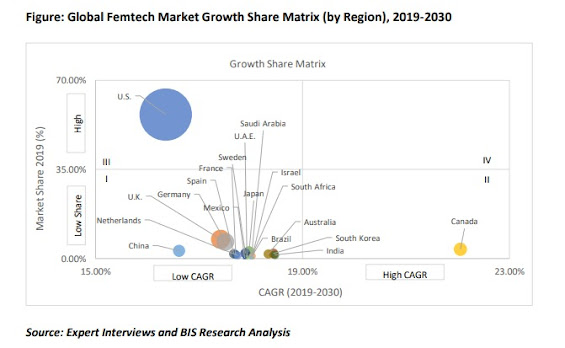
    Growth in Global Female Technology Market

    The growth of the Female Technology ( femtech) market indicates that the industry is on its way to breaking some of the existing barriers. ...